
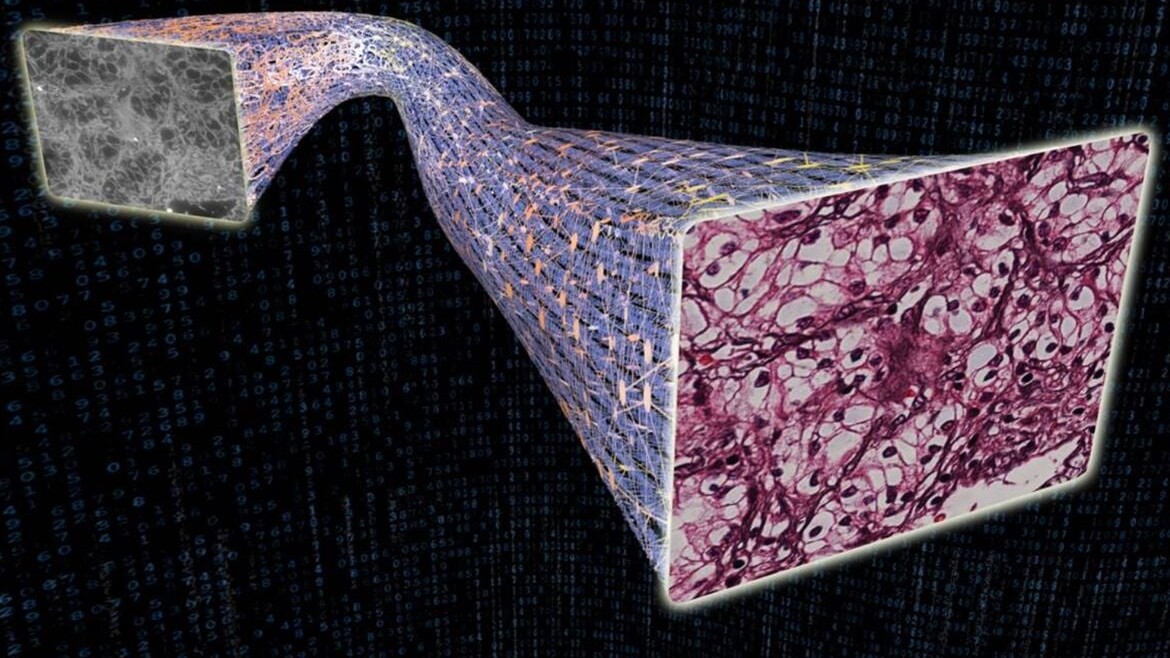
AI systems are currently being trained to paint microscopic images of transparent tissue samples that physicians examine for diagnosis, in a process called virtual staining. In the study, the researchers report on an AI of their own to detect potentially life-threatening errors, called realistic hallucinations, that occasionally come from virtual staining AI models — and autonomously detect those errors without using slides stained correctly by human experts.
This AI technique is called autonomous quality and hallucination assessment tool for virtually stained tissue images, or AQuA. With a set of virtually stained images of human kidney and lung samples, the new tool had 99.8% accuracy telling the difference between images with errors and those without. AQuA detected realistic hallucinations that were missed by board-certified pathologists who reviewed the same stained images. In other experiments, the AI detected hallucinations of different types than included in the data used to train it, as well as errors in images stained by human lab technicians.
BACKGROUND
For pathologists to identify cancer and other diseases based on biopsies, the nearly transparent samples of thin tissue sections must be stained with special dyes, a practice applied for over a century in medicine. In the years ahead, generative AI systems are expected to emulate the chemical staining process in a way that’s faster, cheaper and more efficient.
Labs can take hours, and sometimes up to a day, to stain a sample; AI algorithms could virtually stain a microscopic image in less than a minute, which will significantly speed up diagnosis of patients once the technology is ready for clinical use. AI results would also be more consistent than the work of human experts, which can vary by country and region, between labs, and even among the work of a single technician. Staining in labs is labor-intensive, uses up expensive chemicals and produces millions of gallons of toxic wastewater each year, so virtual staining could also save on costs while being carbon neutral. And virtual staining doesn’t deplete tissue samples, offering the potential to reduce or even eliminate repeat biopsies.